Tiffany Mid-Autumn Interactive H5 Case Study
Background
Tiffany launched a WeChat H5 mini-game for the Mid-Autumn Festival. The experience used Tiffany Blue, a moonlit scene, a small rabbit character, and a simple jump mechanic. Users pressed and held the screen to charge a jump, released to land on the next cloud, collected blue boxes, and generated a personal result page.
The game was lightweight, but its marketing structure was strong: seasonal emotion, brand assets, easy gameplay, score feedback, leaderboard sharing, and a clear reason to replay.
 Tiffany Mid-Autumn H5 loading page
First Impression and Brand Memory
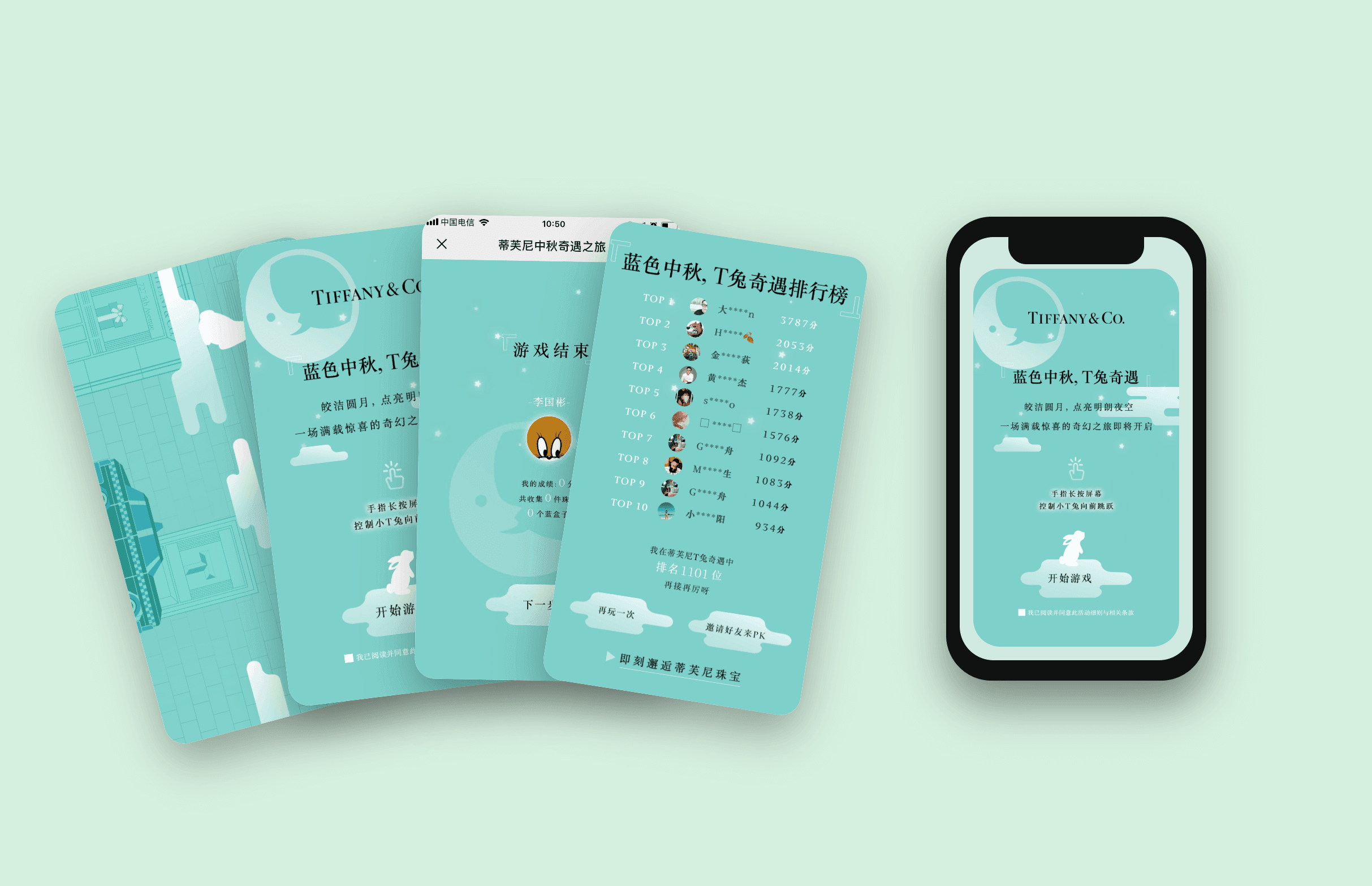
The loading and entry screens immediately establish the campaign world. Tiffany Blue dominates the background, while the moon, stars, clouds, and rabbit create a clear Mid-Autumn mood.
 Tiffany Mid-Autumn H5 home screen
This is important because the user understands the campaign within seconds:
- The occasion is Mid-Autumn Festival.
- The brand is Tiffany.
- The action is simple: press, release, and jump.
- The reward is a playful seasonal experience.
Why a Mini-Game Works for Luxury Marketing
Luxury campaigns often rely on films, posters, and editorial visuals. Those formats can be beautiful, but users usually remain passive. A mini-game changes the relationship. The user has to act, repeat, and pay attention.
 Tiffany H5 gameplay screen with rabbit and clouds
The interaction extends brand exposure from a few seconds to several minutes. Each jump, collection, and retry becomes another small moment of brand contact.
The game also fits the festival. Mid-Autumn is associated with reunion, gifting, moon imagery, and warm emotional exchange. Tiffany used those associations without turning the campaign into a hard sell.
 Gameplay instruction screen with jewelry and blue boxes
Experience Flow
The core flow is simple:
- The user enters the H5 and sees the campaign theme.
- The rules explain the press-and-release jump mechanic.
- The user plays, collects blue boxes, and earns a score.
- A result page shows performance and collection totals.
- The user can view the leaderboard, replay, or share the result.
 Tiffany H5 result page with score and collected items
The design is effective because there is no unnecessary complexity. The game is easy to understand, but the scoring and collection loop gives users a reason to try again.
Leaderboard and Sharing
 Tiffany Mid-Autumn H5 leaderboard
The leaderboard adds light competition. Users can compare scores, replay to improve results, and share their achievement. The result poster makes sharing feel personal rather than promotional.
That distinction matters. People are more willing to share their own score, mood, or festival greeting than a standard brand poster.
Brand and Business Value
The campaign produced value in several ways:
| Value | Explanation |
|---|---|
| Stronger brand recall | Tiffany Blue, the rabbit, blue boxes, and moon imagery repeat throughout the experience. |
| Longer engagement | Gameplay encourages users to spend more time with the brand than a static post would. |
| Social spread | Scores, leaderboards, and personal posters give users a reason to share. |
| Private traffic potential | H5 behavior can connect to WeChat followers, CRM tags, or future festival campaigns. |
| Commerce potential | The journey can be extended toward product pages, store appointments, or member benefits. |
 Interactive H5 campaign flow diagram
Lessons for Brands
Tiffany's Mid-Autumn H5 shows that a seasonal digital campaign does not need to be technically heavy to be effective. It needs a clear cultural moment, recognizable brand assets, low-friction interaction, and a sharing mechanism that feels natural to users.
For brands planning similar work, the most important decisions are:
- Choose a festival or cultural moment that already carries emotion.
- Keep the interaction simple enough for immediate participation.
- Repeat brand assets throughout the journey without making the experience feel like an ad.
- Design the result page and sharing flow from the beginning.
- Connect participation data to CRM or membership operations where appropriate.
Conclusion
Tiffany's Mid-Autumn H5 turned a simple mini-game into a complete seasonal brand experience. It used play to hold attention, familiar festival symbols to create emotion, and social mechanics to extend reach. For luxury brands, it is a useful example of how lightweight interaction can create memorable digital engagement.